
India and China have reached new common understandings agreeing to conduct normalised management and control of the boundary during Foreign Minister Wang Yi's visit to New Delhi, Beijing said.

Prime Minister Narendra Modi is expected to visit Japan and China starting around August 29. The visit to China would be his first after the Ladakh border standoff.
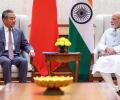
China's Foreign Minister Wang Yi expressed China's anticipation for Prime Minister Narendra Modi's visit to the Shanghai Cooperation Organisation (SCO) summit, emphasizing the importance of strong India-China relations and mutual cooperation.
'If they can be duplicitous, we can be equally duplicitous.' 'If they offer friendship, we reciprocate.' 'If they choose hostility, we respond with equal hostility.'

Kremlin spokesman Dmitry Peskov said the two leaders had a tete-a-tete in the car for about an hour.

External Affairs Minister S Jaishankar discusses India's foreign policy challenges in a multipolar world, emphasizing the need for nimbleness and prioritizing national interests.

Two more individuals have been arrested in Arunachal Pradesh on charges of espionage, bringing the total number of arrests to four. The individuals are accused of sharing sensitive security information with Pakistani handlers.
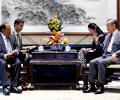
India and China are expected to discuss new confidence-building measures for durable peace and tranquillity along their contested border during Chinese Foreign Minister Wang Yi's two-day visit to India. The visit is seen as an effort to rebuild relations after the Galwan Valley clashes.
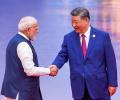
Prime Minister Narendra Modi and Chinese President Xi Jinping held talks focusing on rebuilding bilateral relations, emphasizing border peace and addressing cross-border terrorism.

Chinese Foreign Minister Wang Yi said that it is imperative for the two sides to view each other as partners and opportunities rather than rivals or threats, and invest their valuable resources in development and revitalisation.
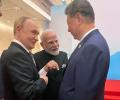
The relations between New Delhi and Washington are on a downturn after Trump doubled tariffs on Indian goods to a whopping 50 per cent, including a 25 per cent additional duties for India's purchase of Russian crude oil.
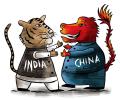
India and China have announced a series of measures aimed at improving their relationship, including maintaining peace along the border, reopening border trade, and resuming direct flights.
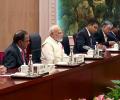
India is committed to taking forward its ties with China based on mutual trust, respect and sensitivity, Prime Minister Narendra Modi told Chinese President Xi Jinping as the two leaders held wide-ranging talks to reset the bilateral relations.
China welcomes Prime Minister Narendra Modi's planned visit to the Tianjin Summit of the Shanghai Cooperation Organisation (SCO), expressing hope that the event will be a 'gathering of solidarity, friendship and fruitful results'.
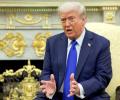
The US Representative criticised the administration's new USD 100,000 fee on H-1B visas, observing that Indians hold 70 per cent of these visas and saying the change directly harms workers who have long supported US innovation across technology, science and medicine.
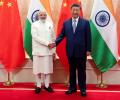
Prime Minister Narendra Modi and Chinese President Xi Jinping vowed to work towards a "fair, reasonable, and mutually acceptable" resolution of the festering boundary issue and pledged to work towards stabilising global trade.
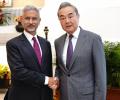
China promised to address three key concerns of India, the sources said.
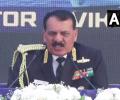
India is strengthening the naval component of its nuclear triad with Navy Chief Admiral Dinesh K Tripathi on Tuesday saying that the third indigenous nuclear-powered submarine 'Aridaman' will be commissioned soon and that his force is focusing on boosting its overall combat prowess.

Nepal has reiterated its claim over the Lipulekh territory, stating it is an inseparable part of the country, after India and China agreed to resume border trade through the area. The Nepalese government has incorporated the territory into its official map and Constitution. India has rejected Nepal's claims, asserting they are not based on historical facts or evidence.

Indian private sector and State-run refiners continued to receive crude oil from Russian suppliers even after November 21 -- the winding-down date for US sanctions on supplies from leading Russian oil producers imposed in October -- as new intermediaries sprung up in West Asia to sell the oil, according to senior refining sources and ship tracking data.
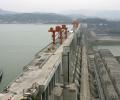
China defends its construction of a dam on the Brahmaputra river in Tibet, addressing concerns from India and Bangladesh about its potential impact on water flow and the environment.

The Congress party has accused the Modi government of a 'deny, distract, lie, and justify' (DDLJ) policy regarding China, alleging territorial setbacks and misplaced economic priorities.
'The real story of 2025 is that India officially stopped being a 'market of the future' and started acting as the world's primary economic engine.'
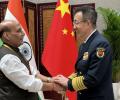
China has called Tibet-related issues a 'thorn' in India-China bilateral relations and a 'burden' for New Delhi, ahead of External Affairs Minister S Jaishankar's visit to China.
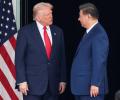
United States President Donald Trump said that China 'knows the consequences' if it attacks Taiwan, asserting that Chinese President Xi Jinping understands the situation 'very well'.
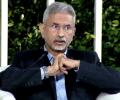
On President Putin's two-day trip to India, Jaishankar said for a "big" and "rising" country like India, it is important to maintain good cooperation with as many important players as possible in the world in line with freedom of choice.

A deep split has emerged within India's auto industry over the proposed CAFE exemption for small cars, with only Maruti Suzuki and Renault backing the move in the final SIAM vote.
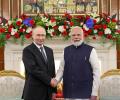
Luckily for us, a Russia that is desperate to stay relevant in an emerging multipolar world finds in India a reliable geostrategic partner. The Russian proximity to India also keeps China from exploiting its economic dominance vis a vis Russia, points out Colonel Anil A Athale (retd).
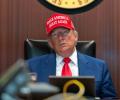
China defended the BRICS economic alliance, stating it is not a bloc for confrontation, after former US President Donald Trump threatened tariffs on countries aligning with its 'anti-American policies'.
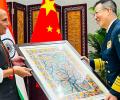
Defence Minister Rajnath Singh, in his meeting with Chinese counterpart Dong Jun in Qingdao on June 26, proposed that India and China should solve the "complex issues" under a structured roadmap comprising steps to de-escalate tensions along the frontiers and rejuvenate the existing mechanism to demarcate the borders.

India abstained from a UN General Assembly resolution demanding Russia ensure the return of Ukrainian children. The resolution passed with 91 votes in favor.

External Affairs Minister S Jaishankar defends India's purchase of Russian oil, stating it is not the largest purchaser and that the US had previously supported such actions to stabilize energy markets. He also addresses concerns about tariffs and trade relations with the US.
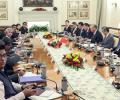
Chinese Foreign Minister Wang Yi's visit to India focuses on border talks with NSA Ajit Doval, amidst efforts to rebuild relations after the Galwan Valley clashes and rising India-US tensions.

The Ukrainian President's remarks come amid US President Donald Trump's criticism of India and China, labelling the countries as "primary funders" of the ongoing war in Ukraine.
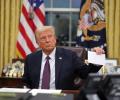
US President Donald Trump claimed India will stop buying oil from Russia, while also stating China will cut back substantially. He also discussed the conflict between India and Pakistan, reiterating his claim of helping settle the conflict.
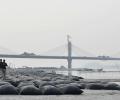
China has formally started the construction of a USD 167.8 billion dam over the Brahmaputra River in Tibet, close to the Indian border in Arunachal Pradesh, raising concerns in India and Bangladesh.
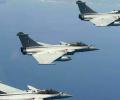
French officials believe the campaign against Rafale was part of a coordinated disinformation drive by China and Pakistan, although their State involvement has not been established.

India and China reviewed the situation along the Line of Actual Control (LAC) in eastern Ladakh and prepared for the next Special Representatives' dialogue on the boundary question.

China has objected to Indian Minister Kiren Rijiju's remarks on the Dalai Lama's reincarnation, urging India to be cautious on Tibet-related issues to avoid impacting bilateral relations. China insists any future Dalai Lama must receive its approval.
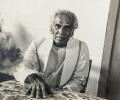
What appeared to be a generous act of friendship was, in truth, a manoeuvre within a much larger strategic game. The United States used the 1962 war not just to aid India but to test how far it could be pulled into the Western fold, points out Dr Kumar.
 © 2026 Rediff.com - Advertise with us - Disclaimer - Privacy Policy - Sitemap - Feedback - About us - Terms of use - Grievances